
How E-Commerce Reshaped Southern California’s Industrial Real Estate Market

by Betty Wang Real Estate Team
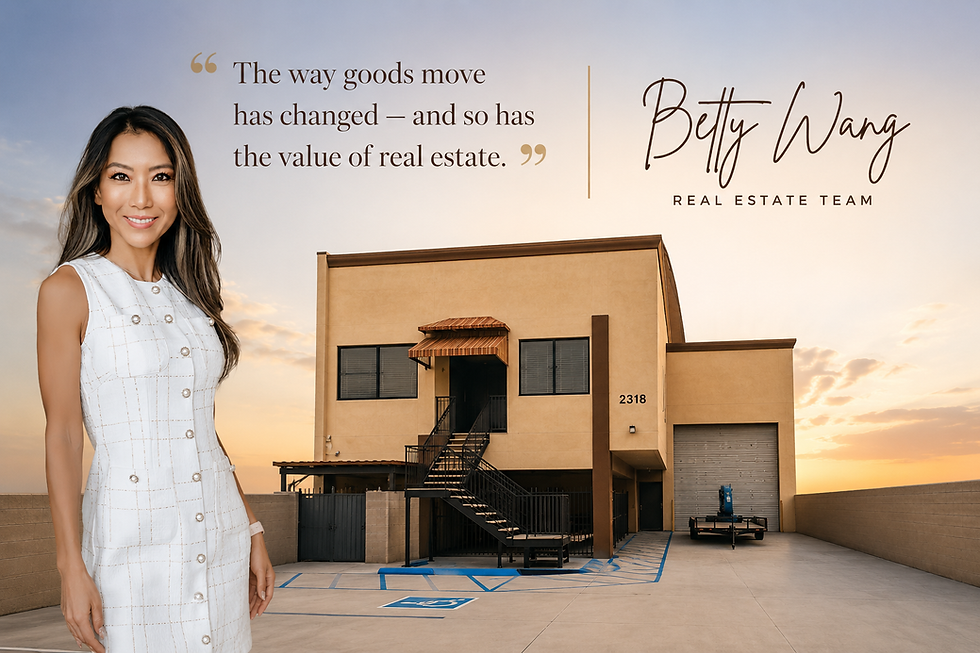
Why location, functionality, and the changing way goods move are creating a new generation of industrial real estate opportunities
For years, industrial real estate was one of the least glamorous corners of the property market. Warehouses were often viewed simply as places to store inventory—functional buildings operating quietly behind the more visible worlds of retail, office, and residential real estate.
E-commerce changed that.
Today, the warehouse is no longer just the end of the supply chain. In many businesses, it has become one of the most important parts of the customer experience.
When a consumer expects an order to arrive tomorrow—or sometimes within hours—the location and efficiency of the building behind that delivery matter enormously. That shift has permanently changed how businesses evaluate industrial space and how investors should think about industrial real estate.
As a Los Angeles real estate broker working across both residential and commercial properties, I find industrial particularly interesting because its value is increasingly tied to something very tangible: how efficiently a business can operate from the property.
From Storefronts to Distribution Networks
Traditional retail once revolved around getting customers to the product.
E-commerce reversed that equation.
Now businesses increasingly need to get the product to the customer.
That has created enormous demand for distribution centers, fulfillment facilities, logistics hubs, and smaller urban warehouses positioned closer to population centers.
Southern California sits at the center of this transformation. Between the Ports of Los Angeles and Long Beach, the region's enormous consumer population, freeway infrastructure, and connection to the Inland Empire logistics corridor, Greater Los Angeles remains one of the country's most strategically important industrial markets.
But not every warehouse benefits equally.
The next phase of industrial demand is increasingly about location plus functionality, rather than square footage alone.
The Last Mile Has Made Location More Valuable
One of the most important concepts in modern logistics is the “last mile”—the final stage of moving a product from a distribution facility to the customer.
It is often one of the most expensive and operationally difficult portions of the delivery process.
That is why industrial properties located within established Los Angeles communities can carry a strategic advantage.
There is only so much industrial land close to millions of consumers.
For an e-commerce operator, importer, distributor, or service business, being closer to customers can mean shorter delivery routes, lower transportation time, and greater flexibility.
This is one reason I pay close attention to infill industrial markets such as South El Monte and the broader San Gabriel Valley.
These are not simply warehouse locations on a map. They sit within an established network of businesses, transportation routes, workers, and consumers that is extremely difficult to recreate.
Industrial Tenants Have Changed
The image of a warehouse tenant has also evolved.
Today's industrial occupant might be an importer, online retailer, specialty distributor, light manufacturer, food-related operator, technology-enabled logistics company, or a growing business combining office, inventory, and fulfillment under one roof.
Many of these companies are thinking beyond rent per square foot.
They are asking:
Can trucks access the property efficiently?
Can we store inventory vertically?
Is there sufficient clear height?
Does the loading configuration work for our operation?
Can employees and management work from the same facility?
How quickly can we reach our customers and transportation corridors?
For investors and owner-users, these questions matter because the buildings capable of supporting modern operations may have a stronger competitive position over time.
The Modern Warehouse Is Becoming More Sophisticated
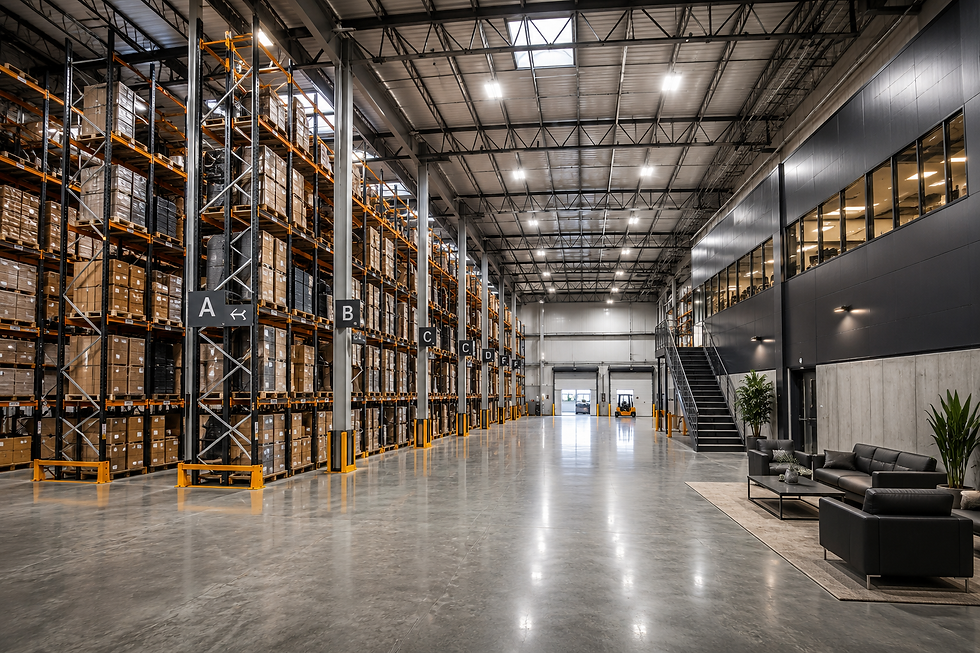
Automation is pushing this evolution even further.
Warehouses increasingly incorporate inventory-management systems, vertical racking, automated equipment, and technology that allows companies to move more goods through the same amount of space.
That makes certain physical characteristics increasingly important.
Clear height, loading access, floor configuration, power capacity, parking, office space, and overall operational efficiency can significantly affect how useful a building is to the next generation of occupants.
In other words, two industrial buildings with similar square footage may have very different long-term value.
One may simply provide space.
The other may provide infrastructure for a business to grow.
That distinction is becoming increasingly important.
Why Southern California Is Different
Southern California has something that cannot easily be manufactured: an enormous concentration of consumers combined with one of the country's most important international trade gateways.
At the same time, industrial land in established Los Angeles communities is limited.
That creates an interesting long-term dynamic.
Some large logistics operations will continue moving farther east where larger parcels are available. But businesses that need access to Los Angeles customers, suppliers, and labor cannot always solve their needs by moving 40 or 60 miles away.
For these companies, strategically located infill industrial properties can remain extremely valuable.
This is why I believe investors should look beyond headlines about the industrial market as a whole.
Industrial real estate is becoming increasingly property-specific and location-specific.
Where 2318 Edwards Ave. in South El Monte Fits
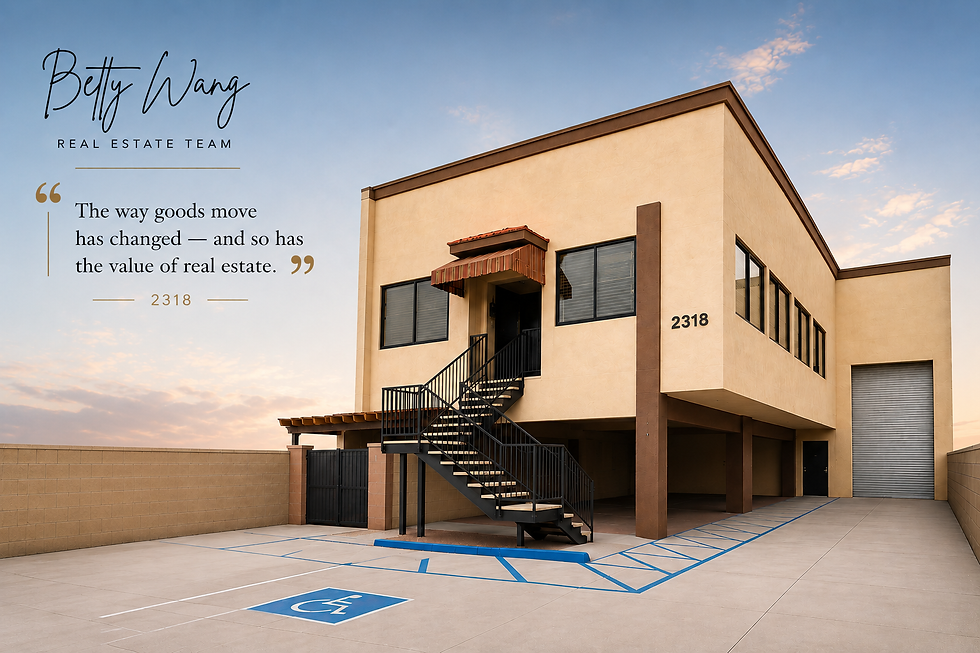
One property that illustrates this conversation is our current industrial listing at 2318 Edwards Ave, South El Monte.
The approximately 9,088-square-foot industrial building sits on roughly 15,236 square feet of land and offers a combination of warehouse and office functionality.
With approximately 26-foot maximum clear height, grade-level loading, and convenient access to the broader Los Angeles transportation network, the property represents the type of infill industrial asset that can appeal to businesses wanting to remain close to the Los Angeles market rather than relocating farther into the Inland Empire.
But what makes a property like this particularly interesting is not simply its specifications.
It is the question an owner-user can ask:
What happens if I own the real estate underneath my business instead of continuing to lease it?
For the right company, an industrial acquisition can become both an operating decision and a long-term real estate investment.
The business gets control over its space while the ownership entity builds equity in the underlying property.
That is a very different conversation from simply comparing monthly rent.
Looking Ahead: Follow the Way Businesses Operate
E-commerce was the catalyst, but the larger transformation is still unfolding.
Consumers are unlikely to give up the convenience of fast delivery. Businesses will continue looking for ways to shorten supply chains, automate operations, and position inventory closer to customers.
That means the strongest industrial opportunities will not necessarily be the biggest warehouses or the newest buildings.
They may be the properties that solve a specific operational problem exceptionally well.
When I evaluate industrial real estate, I therefore look at the property from two perspectives: as real estate and as a business tool.
Who could operate here?
Why would this location matter to them?
What does this building allow them to do better?
And will those advantages still matter ten years from now?
Those are the questions that can reveal opportunities before they become obvious to the broader market.
Thinking About Industrial Real Estate in Southern California?
Whether you are an investor evaluating your next acquisition or a business owner wondering whether it makes more sense to lease or own your facility, the starting point should be understanding where demand is moving—not simply where it has already been.
Want to invest ahead of the trend? Ask us where industrial demand is heading and which Southern California submarkets may fit your strategy.
Betty Wang Real Estate Team
Luxury Residential • Commercial andports Industrial Real Estate
DRE #01946131
Where art connects people and real estate builds legacy.


Comments