
The Warehouse Market Is Moving Again. Here’s What I’m Watching Before Q4.

By Betty Wang, Associate Broker

Earlier this month, my team closed the $3,060,000 all-cash sale of an industrial building at 2318 Edwards Avenue in South El Monte. We represented both sides, found the buyer in about two months, and closed quickly.
That sale gave me a sharper question than “Is the industrial market hot?”
Which buildings still make sense for the people who will actually use them—and at what price?
As we head into the fourth quarter, leasing activity is improving across Greater Los Angeles. But asking rents remain well below their recent highs. That combination creates opportunity for buyers and owners who pay attention to the property itself, the local market, and the numbers behind a deal.
Vacancy is improving. Rents tell a different story.

Greater Los Angeles industrial vacancy fell to 5.5% in the second quarter of 2026, its first quarterly improvement since late 2022. At the same time, average asking rent declined to $1.17 per square foot per month, triple net—about 33% below its Q2 2023 peak.
So I would be careful with anyone who tells you that one statistic settles the market. More occupied space is encouraging. It does not mean every landlord can raise rent or every seller can use a peak-market comparable.
The differences within Los Angeles matter, too. Central Los Angeles industrial vacancy was 3.2% in Q2, while San Gabriel Valley leasing activity rose to 2.6 million square feet, up 68% from Q1. Those figures point to active demand, but buyers still need to study the building and its immediate competition.
“Last mile” means more than a pin on a map.
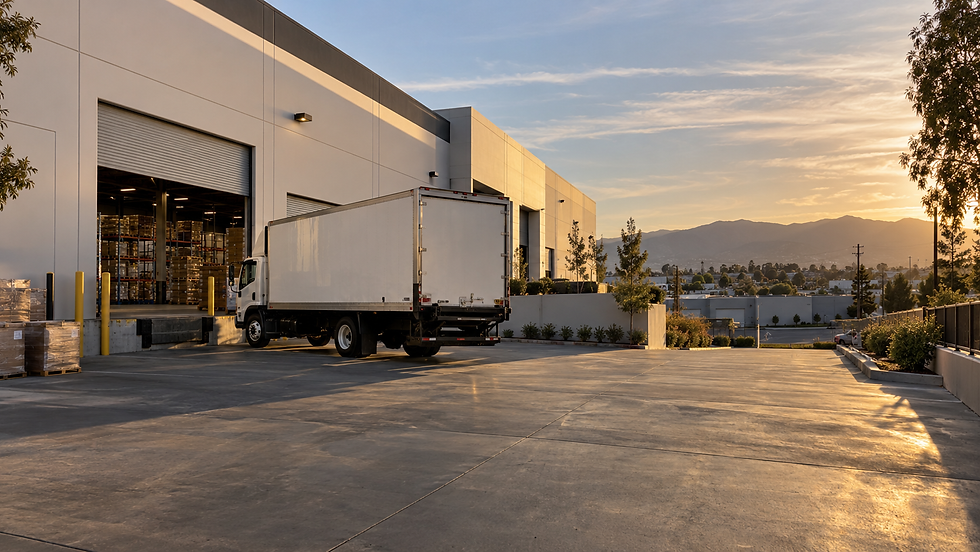
A warehouse close to customers, workers, or major routes may save a business time on every delivery. That is why I continue to watch established infill locations across Los Angeles and the San Gabriel Valley.
But location is only the beginning of the conversation. When I walk an industrial property with a buyer, I want to know: Can their trucks enter and turn comfortably? Is there room to load? Does the clear height work for their operation? What power is available? Are their intended use and any planned improvements permitted?
A building can look compelling in a listing and still be the wrong fit on the ground. Conversely, a practical building in the right location can be far more valuable to a particular business than a prettier one farther away.
Financing is shaping the buyer pool.

The cost and structure of financing remain central to industrial deals. Buyers are looking closely at their monthly carrying costs, required improvements, and how much cash they need to keep in the business after closing. Sellers benefit from understanding those constraints before choosing a price and negotiating terms.
Our South El Monte sale was all cash. That made for a fast closing, but it is one transaction—not a template for every buyer.
For an eligible business purchasing space it plans to occupy, an SBA 504 loan may be one financing option to explore with a lender and Certified Development Company. Eligibility and the right loan structure depend on the business and property; an investor buying a building solely to lease out has a different financing conversation.
The owner-user often sees value differently.

An investor may begin with rent, expenses, tenant quality, and the return on the purchase price. A business owner also has to picture the workday: inventory arriving, employees parking, products moving, and customers receiving orders.
That difference changes how I present a property. Before bringing 2318 Edwards Avenue to market, we gathered the information buyers would need to evaluate the building and put considerable work into how it was shown. The goal was to help a serious buyer understand its practical use and move through due diligence with confidence.
In a market where financing and operating costs are under scrutiny, clear property information is part of the sales strategy.
Creative uses deserve careful homework.

Some buyers see possibility in an older industrial building: a showroom connected to distribution, a production space with offices, or another combination of uses. I understand the appeal. The best opportunities sometimes come from seeing what a property could become.
I would still put the due diligence ahead of the vision. Verify zoning and permitted use, then assess parking, power, fire requirements, accessibility, and the cost and timing of improvements. A creative concept only becomes a sound investment when the property can legally and financially support it.
How I would position for 2027

If you own an industrial building and might sell next year, this fall is a good time to organize the facts: leases, operating expenses, permits, improvements, and any issues a buyer will discover during diligence. Then review pricing against the buildings buyers can choose from now.
If you are buying, define your operating requirements before falling in love with a location. Test the purchase against realistic financing, improvement costs, and a range of future rents or business needs. You may find that the best opportunity is a building that fits your operation exceptionally well, even if it is not the flashiest listing.
My read: Southern California industrial demand is active, but the market is asking everyone to be more precise. I see opportunity in well-located buildings, prepared sellers, and buyers who know exactly what their business needs. The price and plan still have to work.
That is the approach we brought to our recent South El Monte sale, and it is the approach my team will take into Q4.
Considering an industrial purchase, sale, or investment for 2027? Message Team Betty Wang. I would be happy to discuss the outlook for your property and your goals.
Betty Wang | Associate Broker
Betty Wang Real Estate Team
Where arts connects people, and real estate



Comments