
Buying a Historic Estate in Pasadena: What Luxury Buyers Should Know Before They Fall in Love

By Betty Wang Real Estate Team
There is something about a beautiful old Pasadena home that a new construction simply cannot reproduce.
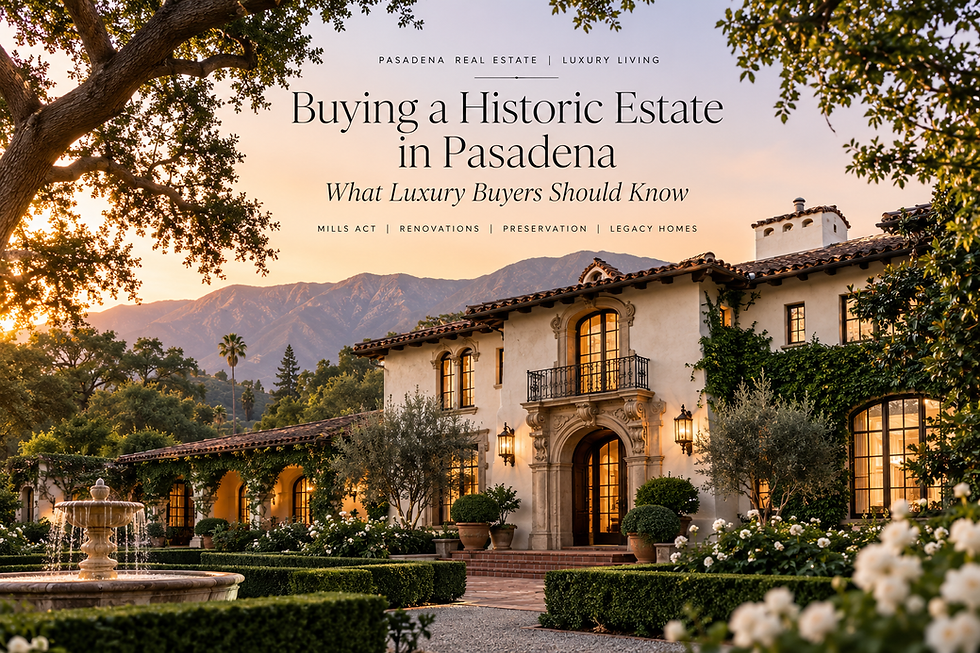
Maybe it is the way the house sits on the land. The mature trees. The proportions of the rooms. The original windows and millwork. A grand staircase worn smooth after generations of use. Or a garden that feels as though it has always belonged exactly where it is.
Pasadena has an architectural depth that is unusual even for Southern California. Its neighborhoods contain estates and residences dating from the late 19th and early 20th centuries, along with important examples of Craftsman, Spanish Colonial Revival, Mediterranean Revival, Tudor Revival, and other architectural styles. The city itself describes Pasadena as a center of Southern California architecture, with many neighborhoods already recognized as landmark or historic districts. For the right buyer, these aren't simply houses.
They are legacy properties.
But I always tell buyers something important: fall in love with the house, but understand what you are buying before you buy it.
A historic estate can be an extraordinary long-term asset. It can also come with restrictions, responsibilities, and costs that are very different from purchasing a newer luxury home.
Here are the things I want my buyers to understand.
1. “Old,” “Architecturally Significant," and “Historically Designated” Are Not the Same Thing
One of the first questions I ask when looking at an older Pasadena property is the following:
What exactly is its historic status?
A beautiful 1920s residence is not automatically a designated historic property simply because of its age.
A property may be individually designated, located within a historic or landmark district, listed on a state or national register, eligible for designation without currently being designated, or simply be an older property with no formal historic status.
That distinction matters.
In Pasadena, a major project proposed for a property more than 45 years old may require a historic resource evaluation to determine whether the property is eligible for historic designation.
So before planning the dream renovation—moving windows, changing the façade, adding square footage or substantially reworking the property—I want to understand the home's status and what level of review may apply.
For a luxury buyer, this should be part of due diligence, not something discovered after closing.
2. The Mills Act Can Be Valuable—but Understand the Contract Before Counting the Savings
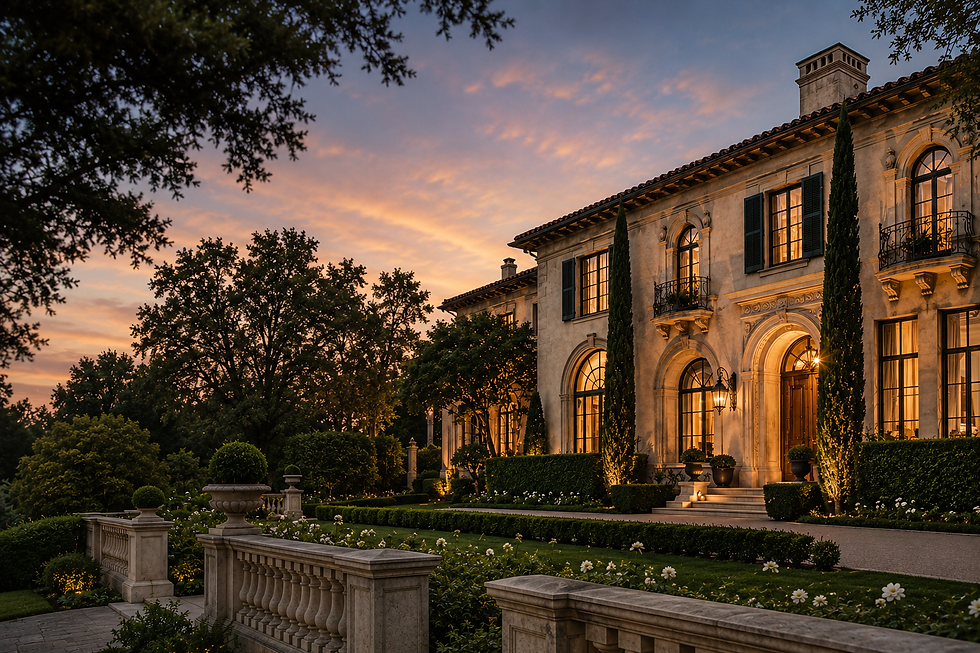
One of the most interesting advantages associated with some historic properties in Pasadena is the Mills Act.
California created the Mills Act as an incentive for owners to preserve qualified historic buildings. Pasadena participates through its Historic Property Contract Program. Under the program, qualifying owners may enter into an agreement with the city to rehabilitate, restore, and maintain the property according to preservation standards in exchange for potential property-tax relief.
For a buyer purchasing a valuable Pasadena estate, the potential savings can be meaningful.
But I would never tell a buyer simply:
“It has the Mills Act, so your taxes will be low.”
It is more complicated than that.
The actual tax benefit varies by property, and the county assessor determines the valuation under the applicable Mills Act methodology. Mills Act properties are reassessed annually, so the tax amount can change.
There is another important point many buyers don't realize:
An existing Mills Act contract stays with the property when it is sold.
California describes these contracts as having an initial minimum ten-year term with annual extensions, and subsequent owners inherit both the benefits and the obligations of the agreement.
That means when one of my buyers is considering a Mills Act property, I want to see the actual contract—not just the MLS description.
What work has been promised? What has already been completed? What remains? What maintenance obligations exist?
The tax benefit is attractive, but it comes with stewardship.
3. Renovating a Historic Estate Requires a Different Mindset
Luxury buyers often walk into an older estate and immediately see possibilities.
Open this wall.
Expand the kitchen.
Replace those windows.
Add a primary suite.
Build a pool house.
And sometimes all of those things are possible.
But with a historic property, the question isn't only “Can we afford to do it?”
It is also “Are we allowed to do it, and how should it be done?”
Work on protected historic properties can be subject to preservation standards and local review. Mills Act properties, for example, require restoration and rehabilitation consistent with historic preservation standards.
This doesn't mean you have to live in a museum.
Some of the most beautiful historic estates I see combine original architecture with extremely sophisticated contemporary living.
The difference is that the best renovations don't fight the house.
They understand it.
A well-designed kitchen can be completely modern while respecting the scale and architecture around it. New mechanical systems can disappear behind historic interiors. Bathrooms can be luxurious without making a 1920s estate suddenly feel like a 2026 spec house.
For me, that balance is where historic-home renovation becomes interesting.
4. Inspect the Things You Cannot See
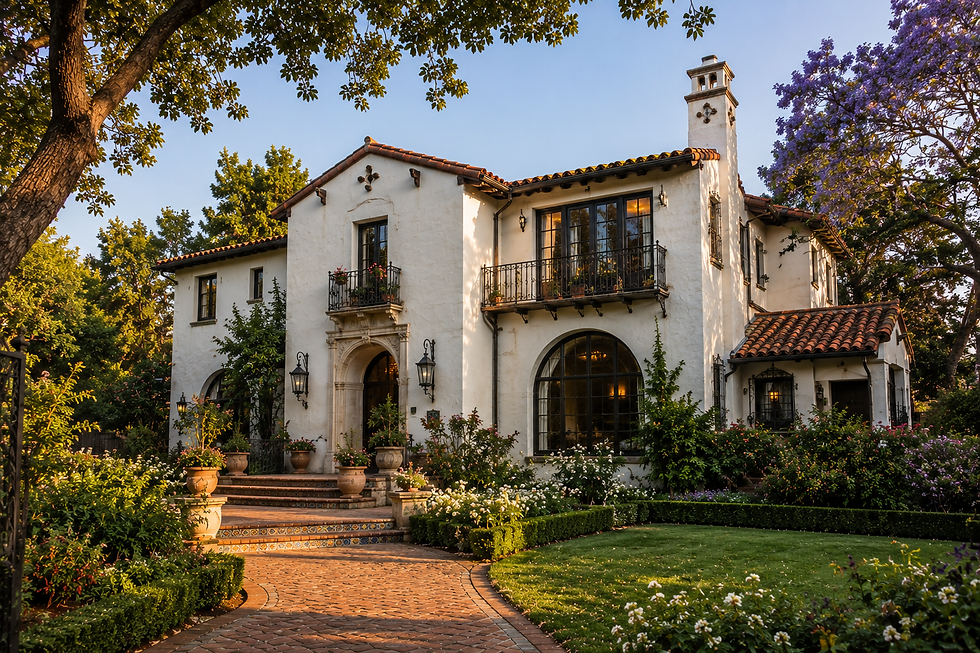
With newer luxury construction, buyers tend to focus heavily on finishes and workmanship.
With an older Pasadena estate, I look deeper.
A gorgeous living room doesn't tell us what is happening behind the walls.
Depending on the age and renovation history of the property, due diligence may need to look carefully at the following:
electrical systems and panels
plumbing and supply lines
sewer condition
foundation and seismic considerations
roof and drainage
HVAC
fireplaces and chimneys
waterproofing
windows and doors
previous additions and permits
pools, retaining walls and exterior structures
And then there is something less technical but equally important:
What original craftsmanship is still there?
Original hardwood floors, leaded or stained glass, built-ins, tile, hardware, plasterwork, and millwork may be difficult—or extraordinarily expensive—to recreate.
Sometimes what looks “old” to an inexperienced buyer is actually one of the most valuable things in the house.
I would rather know what can be restored before deciding what should be replaced.
5. Insurance Deserves Attention Earlier Than Most Buyers Expect
Insurance is now part of California real estate due diligence in a way it wasn't years ago.
With an older estate, I don't like leaving the insurance conversation until the last few days of escrow.
The age of the roof, electrical system, plumbing, previous claims, construction materials, location, and replacement cost can all affect underwriting.
And replacement cost deserves particular attention with a historic luxury property.
If a home contains custom millwork, specialty plaster, imported tile, historic windows, or other craftsmanship that would be extremely expensive to reproduce, insuring an ordinary number of square feet isn't necessarily the same thing as adequately insuring the house.
For that reason, I encourage buyers to investigate insurance availability and coverage early—while the rest of the property due diligence is still underway.
6. Maintenance Is Part of the Luxury
Historic home ownership is not for everyone.
If your definition of luxury is a house requiring almost no attention, a significant historic estate may not be the right fit.
But there is another kind of luxury.
It is living with materials and craftsmanship that would be prohibitively expensive to reproduce today. It is owning a home whose architecture has survived changing trends. It is walking through rooms that have character before a single piece of furniture is placed inside them.
These houses ask something of their owners.
You maintain the woodwork rather than automatically replacing it. You find the right craftsperson. You repair something properly because the shortcut may destroy something that cannot easily be recreated.
To the right owner, that isn't an inconvenience.
It is part of the privilege of owning the property.
7. Why the Best Historic Homes Can Remain So Desirable

No property is guaranteed to appreciate, and I would be very cautious of anyone presenting a historic designation as an automatic investment advantage.
But exceptional historic properties have something that matters enormously in luxury real estate:
scarcity.
You can build another large house.
You cannot build another 1910 house in 1910.
You cannot recreate the exact parcel, mature landscape, original architecture, neighborhood history, and decades of stewardship that produced a truly exceptional estate.
Pasadena's own preservation ordinance recognizes historic resources as economic assets and identifies preservation as one way to stabilize and improve property values and neighborhood character.
In the luxury market, I find that the most compelling historic homes are not simply “old homes.”
They are homes where architecture, land, condition, provenance, and location come together.
Those properties can be difficult to compare by price per square foot alone.
A buyer is purchasing something much harder to quantify.
Before You Write the Offer
When I represent a buyer considering a historic Pasadena estate, I want to answer several questions early:
What is the property's historic status?
Is it currently under a Mills Act contract?
If so, what obligations transfer to the buyer?
What renovations or additions have already been made, and were they permitted?
What changes would the buyer eventually like to make?
What original architectural elements remain?
What do the major systems tell us about future capital expenses?
Can appropriate insurance be obtained at a reasonable cost?
And perhaps most importantly: is this the right house for this particular buyer?
Because buying a historic estate is different from buying a newly built luxury home.
You aren't starting with a blank canvas.
You are becoming the next owner of something that already has a story.
And when the architecture is exceptional, the property has been thoughtfully preserved, and the buyer understands both the responsibilities and the opportunities, that can be exactly what makes the home worth owning.
Looking for a historic or Mills Act property in Pasadena?
Pasadena is one of my favorite markets precisely because homes here cannot all be reduced to the same formula.
Architecture matters. Land matters. Neighborhood matters. History matters. And with significant properties, knowing what to investigate before writing the offer can matter just as much as negotiating the price.
If you're considering a historic estate, a Mills Act property, or simply an architecturally significant home in Pasadena, my team can help you evaluate the property from both sides: how you will live in it today and what you will be responsible for preserving tomorrow.
Eyeing a historic estate? Ask us about Mills Act properties in Pasadena.
Betty Wang | Associate Broker | DRE #01946131
Betty Wang Real Estate Team: Where Art Connects People and Real Estate Builds LegacyLuxury Real Estate • Strategic Investments in Beverly Hills • Los Angeles simply• Pasadena


Comments